INNOVATION DESIGN, PROTOTYPE & PRODUCT STRATEGY
Role: Lead Designer
User Research and Testing
Workshop Facilitation
UX Design
Challenge: To stay competitive, our client had to change how they worked with customers. While they were a respected furniture manufacturer, they were losing business to competitors offering "smart furniture" and space-tracking services.
They asked IBM to help them modernize. Together, we explored how cloud technology and data could transform their business.
To build the right solutions, we dove into the complex challenges of the people who manage and work in modern offices, with a special focus on the challenges of maintenance.
Client: Leading Office Furniture Manufacturer
BUSINESS FRAMING
We started the engagement by meeting with our project sponsors at the client site. We outlined with them a Business Opportunity Statement that guided us as we worked through understanding the needs of our target users and exploring the capabilities of technology.

USER RESEARCH
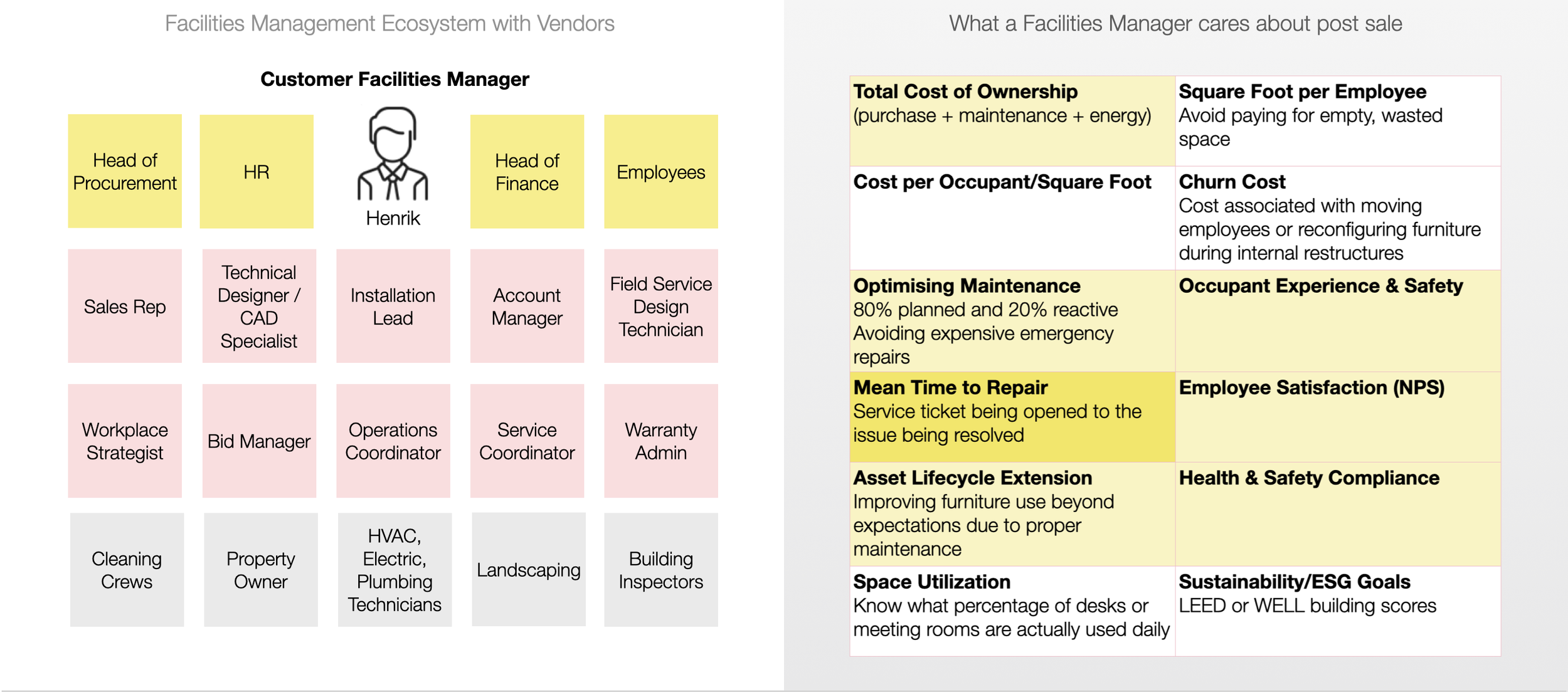
We interviewed facilities managers and created Empathy Maps, but our key insights came from Mapping the Ecosystem and the Key Stakeholders to whom the facilities manager is responsible and accountable; these are highlighted in yellow. The key people he engages with from the client organization are highlighted in pink. We decided to focus on the facilities manager’s Jobs-to-Be-Done and the Success Metrics by which he is measured. We scoped the project to focus on reducing the Mean Time to Repair (MTTR) to achieve maximum impact for the FM’s required outcomes. We believed that solving this would directly reduce the total cost of ownership, increase employee satisfaction, improve safety compliance, and optimize maintenance.
WORKSHOP CO-CREATING WITH OUR CLIENT
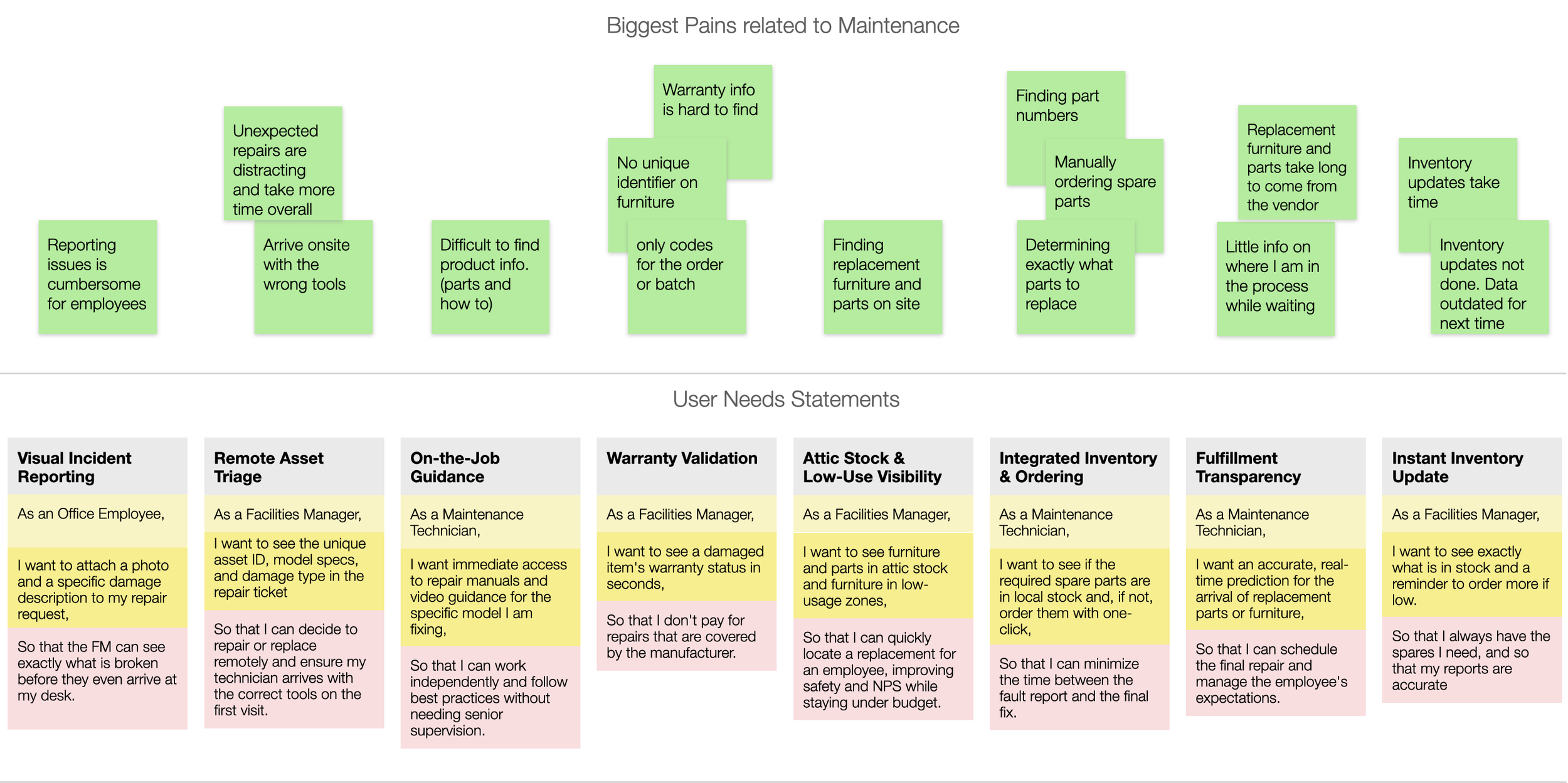
Together with facilities managers, we mapped the process of furniture maintenance from the initial report of an issue to closing the ticket, updating inventory, and reporting. At each step, we documented vendor touchpoints, actions, the systems used, key data, durations, and pain points.
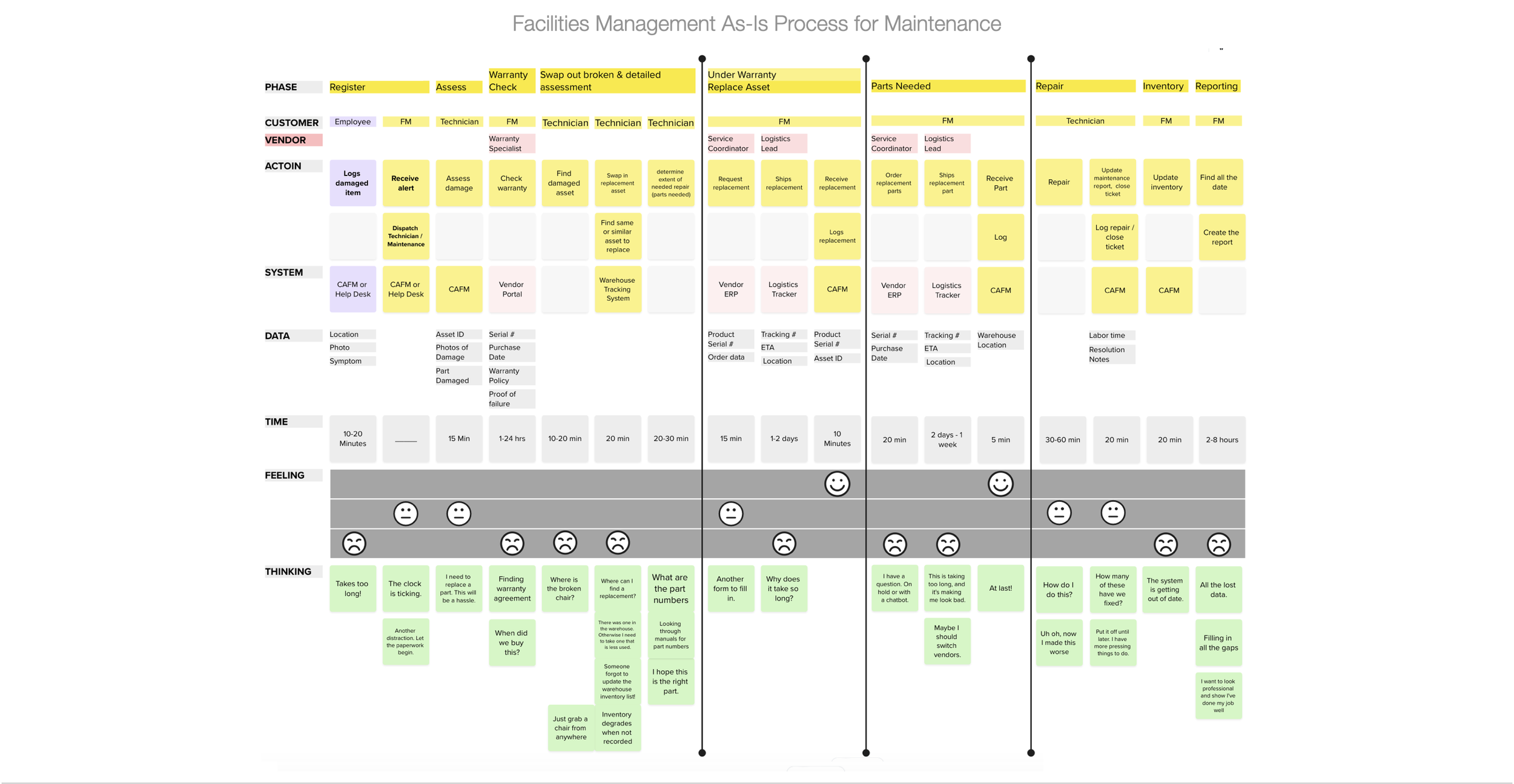
We captured the greatest pain points and used them as a starting point to create User Needs Statements.
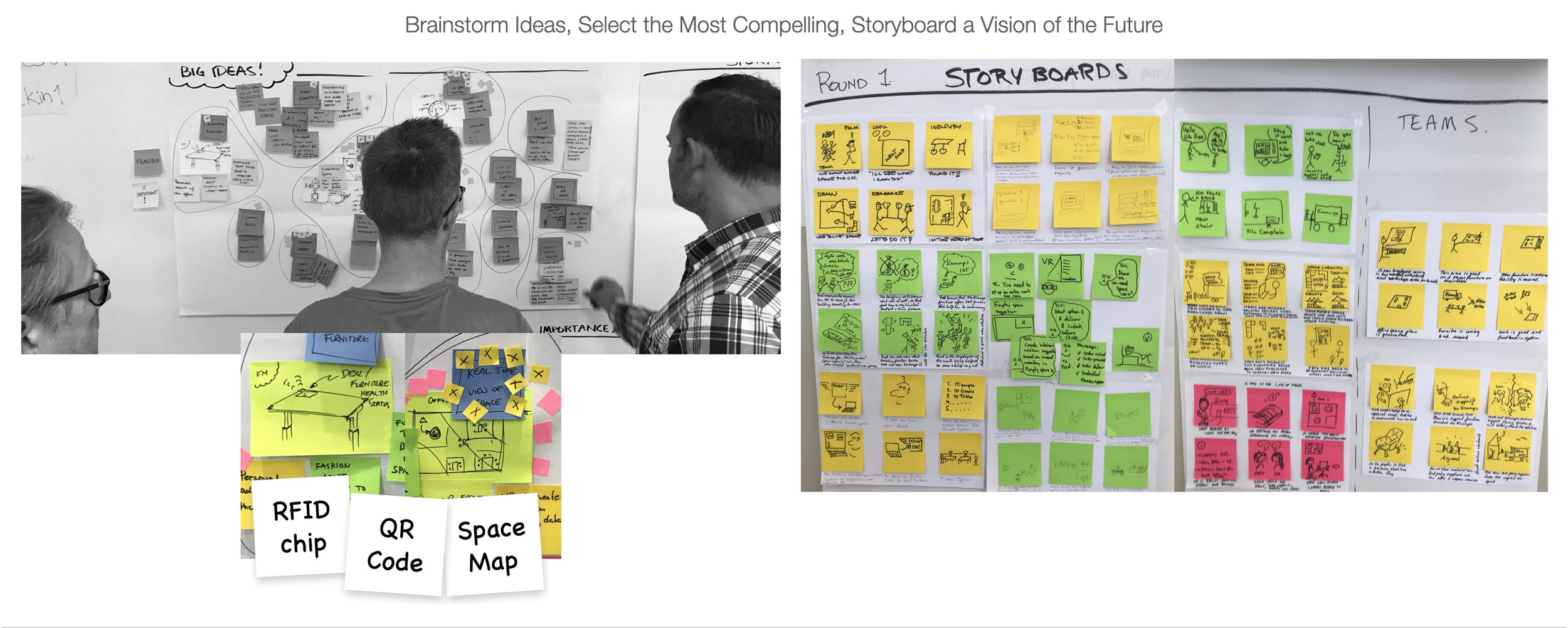
We brainstormed Ideas to address the User Needs and prioritised QR codes on furniture and RFID tags to track location. Each participant wrote a Storyboard to describe the users’ new experience and capabilities.
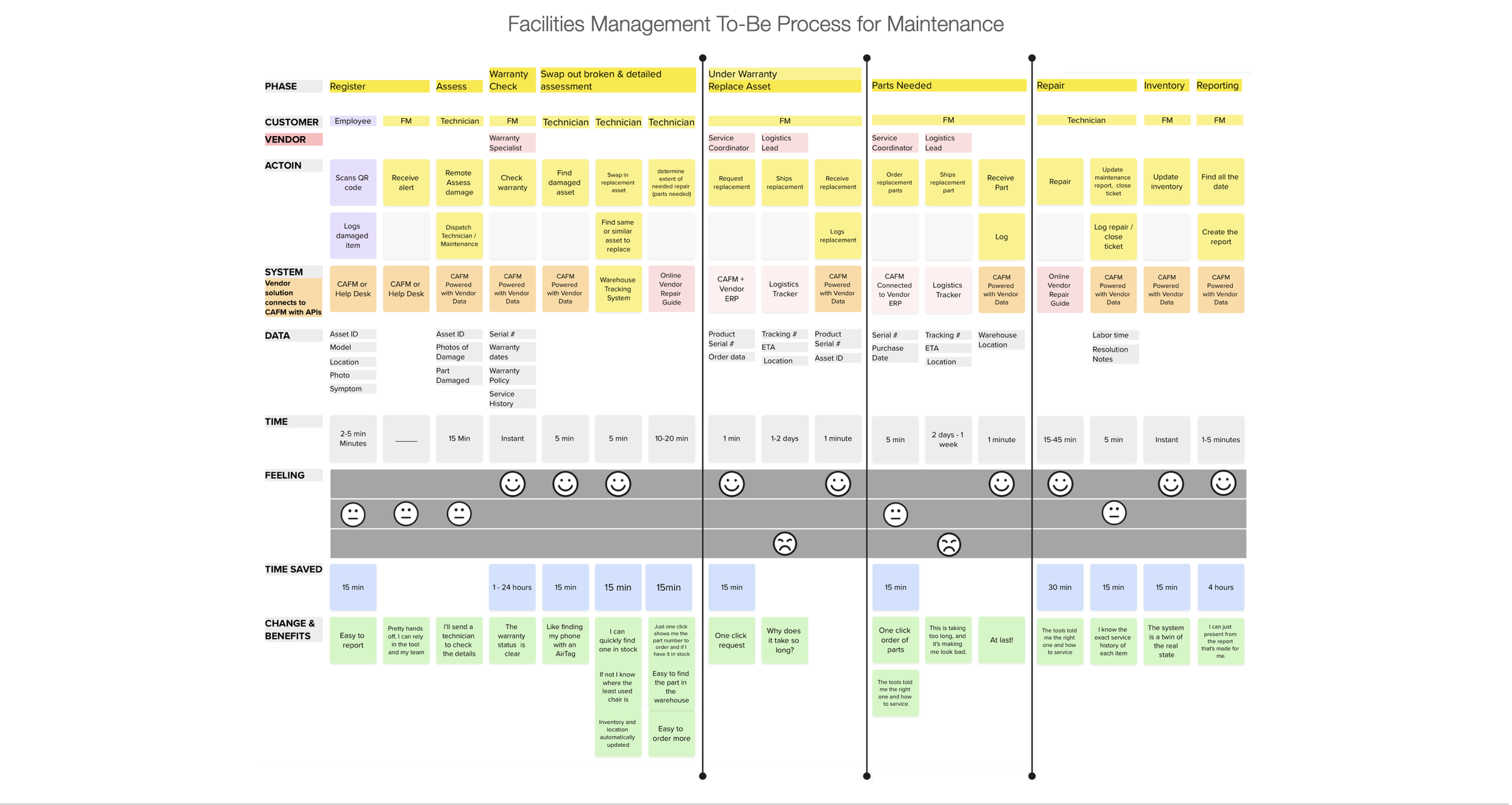
As each participant presented their storyboards, we collected all of the user capabilities described, and used them to map the To-Be Process. We highlighted the change to the systems touched, updated the data transferred, noted the difference in time saving for each step, and captured the benefits our users would experience.
PROTOTYPING AND MINIMUM VIABLE PRODUCT ROADMAP
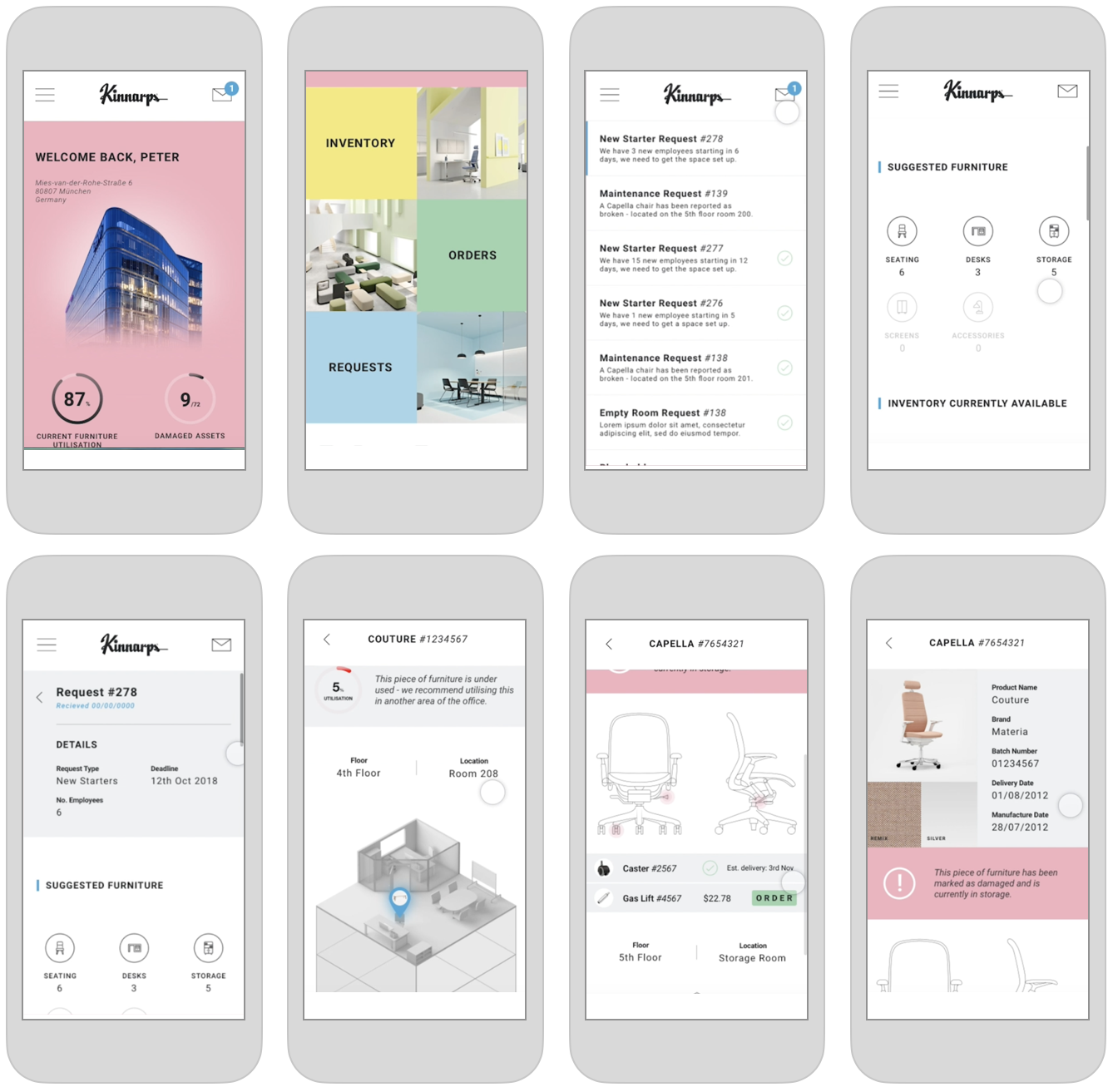
We created a rapid prototype of the user experience (shown at the top of the page) to generate excitement for the project.
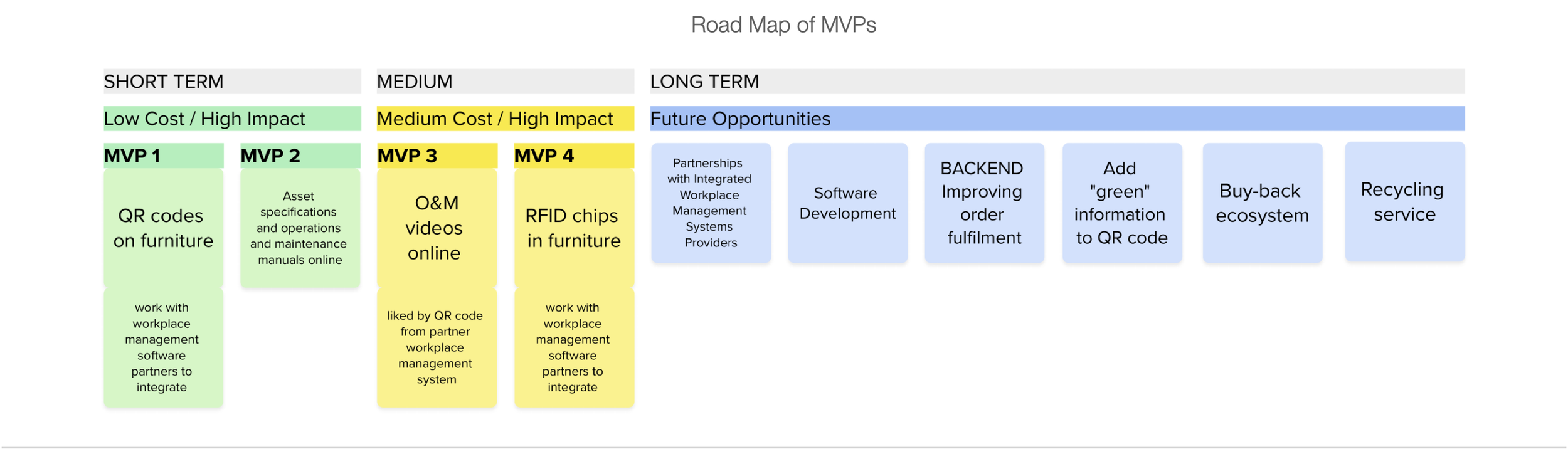
Through this process, we learned that a more efficient approach to achieving our client’s business goals would be to develop the “smart furniture” and integrate the data directly into their customers’ existing workplace management systems. This allowed them to achieve their objectives without the overhead of developing proprietary software—at least for the time being. We then mapped a series of MVPs and future concepts for further exploration.